
Nicholas Blanford – Syria and Lebanon
David chats with journalist Nicholas Blanford about the effect of the Syrian civil war on Lebanon. A longtime contributor to Christian Science Monitor and a resident of Beirut, Blanford takes a look at the possible implications of a U.S. led strike in Syria and how it may affect the region and the already delicate situation in Lebanon.
Original Air Date: 5-06-2014
[audio:http://1690wmlb.com/wp-content/uploads/2014/05/CWDL-Nick_Blanford_Syria_and_Lebanon.mp3] David is joined by author Dan Fagin to chat about his new book Toms River: A Story of Science and Salvation. Set in the town of Toms River in New Jersey, this incredibly in-depth book tells the decades long story of a cancer epidemic in the town and the reluctance of city, state, and federal official to admit that this was likely caused by the industrial book that came in the 1950s.
 David is joined by Massachusetts Governor Deval Patrick to chat on the first anniversary of the Boston Marathon bombing. This conversation took place on April 22, the day after the 2014 Boston Marathon. Patrick talks about his memories of the 2013 bombing and the steps the city and state took to ensure the safety of all runners and spectators in 2014.
 David chats with former colleague Allan Dodds Frank about their work on the story of Charles Keating who was best known for his role in the savings and loan scandal of the late 1980s. Since the scandal, Dodds Frank has been honored for his commitment to exposing the story that eventually led to a 10-year prison sentence for Keating. Keating passed away on March 31, 2014 at age 90.
 David is joined by Atlanta roots and blues singer/songwriter/guitarist Marshall Ruffin to talk about his craft. Marshall’s story begins at a very young age in Virginia when he found his mother’s guitar. After that, a love was born. Ruffin has been playing music since that day and spends his time as a solo performer, session musician, and studio engineer with a big voice and plenty of soul to spare.
 David speaks with Susan Shillinglaw, a Steinbeck Center Scholar and author of the new book On Reading the Grapes of Wrath, on the subject of Steinbeck’s 1939 Dust Bowl novel The Grapes of Wrath. This book tells the tale of the Joads, a family of Okie farmers looking for a better life in California. Aside from being a popular read in high school and university literature classes, the book has also served as the basis of tunes from Woody Guthrie and Bruce Springsteen.
 David is joined by writer Daniel Gordis to chat on the subject of Daniel’s latest book “Menachem Begin: The Battle for Israel’s Soul.” A very controversial and often disparaged leader, Begin was Prime Minister of Israel from 1977-1983. While history tends to see Begin in negative light, Gordis offers reasons why he should actually be more well-respected.
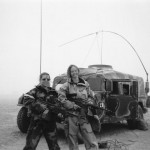 David chats with Kayla Williams about her latest book Plenty of Time When We Get Home: Love and Recovery in the Aftermath of War. This book chronicles Kayla’s experiences in combat during the Iraq war with particular focus on the recovery from an IED blast which left her future husband gravely wounded and unable to return to combat. Aside from telling a story, the book also addresses the mental and physical challenges soldiers faced during the Iraq and Afghanistan when trying to reconstruct a normal life after their combat duty has ended.
 David chats with David Henry about comedy legend Richard Pryor. David, along with his brother Joe, has written a new biography on Pryor entitled Furious Cool: Richard Pryor and the World That Made Him. While most are familiar with Richard Pryor through either his film roles or his stand-up comedy, most are relatively unfamiliar with his upbringing. Born in Peoria, Ill., Richard used the characters he met in his early years to influence his comedic styling throughout his career.
 David is joined by Atlanta Magazine writer Rebecca Burns to chat about her article “The Day We Lost Atlanta.” This article, written for Politico, talks about the challenges facing Atlanta regarding transportation and how these issues all came to the forefront in late January 2014.