
Stanley Crouch – Jazz and Civil Rights
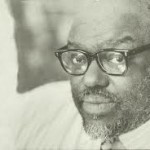 It would be hard to argue that there was a more important year in the Civil Rights movement than the year 1963. Whether it was the iconic acts of defiance by Bull Connor, the assassination of Medgar Evers, or the “I Have A Dream” speech by MLK, Jr., the year marked a seminal turning point in the struggle for civil rights. So as we look back 50 years later, David is joined by legendary jazz critic Stanley Crouch to examine the role of jazz in the civil rights movement.
Original Air Date: 10-09-2013
Part 1
Part 2
[audio:http://1690wmlb.com/wp-content/uploads/2013/10/CWDL-Stanley_Crouch_Jazz_and_Civil_Rights_Part_2.mp3]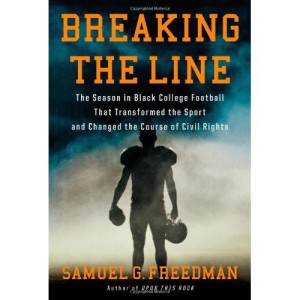 David is joined by professor and author Samuel Freedman to chat about his new book Breaking the Line. The book examines the fragile relationship between college football and civil rights with a specific look at two HBCs, Grambling and Texas A&M. During the 1960s, these two powerhouses fought for the right to play against white teams.
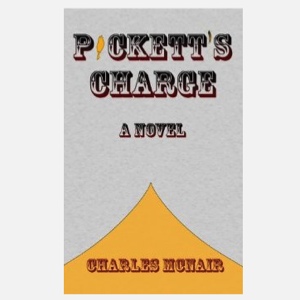 David is joined by AM 1690 book reviewer Charles McNair to chat about his new book Pickett’s Charge. The book tells the tale of Civil War veteran Threadgill Pickett and his quest for revenge. After breaking out of his Alabama nursing home, Pickett encounters a number of characters in this Southern odyssey including a wannabe country singer, two brothers building a time machine, and a group of Klan members.
 David is joined by Mexican-American journalist Alfredo Corchado to chat about his new book Midnight in Mexico: A Reporter’s Journey Through a Country’s Descent into Darkness. In the past six years, more than 80 thousand people have been murdered as a result of Mexico’s drug war. While most reporters steer clear of dangerous towns like Ciudad Juarez, Corchado has stayed and reports on issues like government corruption and crime which have eventually led him to reporting on the drug war, even if it is much to the chagrin of his family.
 We all know that the Beltline has increased the city’s walkability potential and has become an example to other cities around the country, but what else can be done to help the city grow in an intelligent way? David chats with Chris Leinberger, a professor at George Washington University and a senior fellow at the Brookings Institution, about the future of Atlanta and what can be done to help it keep pace with larger cities around the country. Leinberger talks his session at the (co)lab summit called “The Future of Cities” that outlines steps that can be taken to increase the potential of urban centers.
 David speaks with April Rinne, the Chief Strategist of Collaborative Lab in San Francisco. In her work at Collaborative Lab, she thinks about ways the economy can act in ways that reflect how people are interacting whether it be through shared consumption like ZipCar, Air B&B, or other shared methods of consumption.
 David is joined by Glen Hiemstra of Futurist.com to talk about the future. A notable thinker and consultant, Hiemstra focuses on how to think outside the box when planning for the future whether on a personal or professional level. Glen will be speaking at the (co)lab summit on Monday, September 23 for the Modern Drivers of Change session.
 Joey Reiman is an Atlanta-based ideation and purpose marketing professional, author and university teacher, famous for his theory that companies which remain true to their “purpose” – an organization’s distinct reason for being – attain “soulful excellence” and outperform the stock market. In this two-part interview, Joey gives specific examples of businesses who follow his theories and how an under-performing business can revitalize itself by using his simple philosophies. Reiman is also CEO and Creative Guru at BrightHouse, a purpose-driven marketing agency.
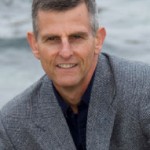 David chats with Steven Kleinman of the Suffan Group about the idea of moral conflict and war. Of course, when thinking about war most think about the obvious physical and mental conflict, but Steven provides a third layer and the role of moral conflict and how it can affect not just a war’s outcome but also those who are interpreting the outcome. Steven Kleinman is a career military intelligence officer and a recognized expert in the fields of human intelligence, strategic interrogation, special operations, and special survival training.
 David speaks with journalist David Hoffman about his article “Saving the World at Plutonium Mountain.” The origins of this article can be traced back to the end of the Cold War and Russia’s disposal of their cache of plutonium, a main ingredient in the construction of a nuclear bomb. As it turns out, this material has simply dumped into a mountain in Kazakhstan where it stayed for 10 years before some scavengers found the plutonium in plain view. Along with Russian and American scientists, Kazakhstan spent the next 15 years disposing of this highly hazardous material.